SAINT
LAURENS

A shop has to get one thing exactly right: when someone pays, the order, the stock and the receipt all agree.
The store is a single Next.js application. Pages read the database directly, changes go through server actions, Postgres holds the data, Stripe takes payment and Resend sends the confirmation email.
The customer journey runs from catalogue to cart, checkout, payment, order and fulfilment. Money is stored as whole cents everywhere and only turned into rand when it is displayed.
The server decides
what things cost.
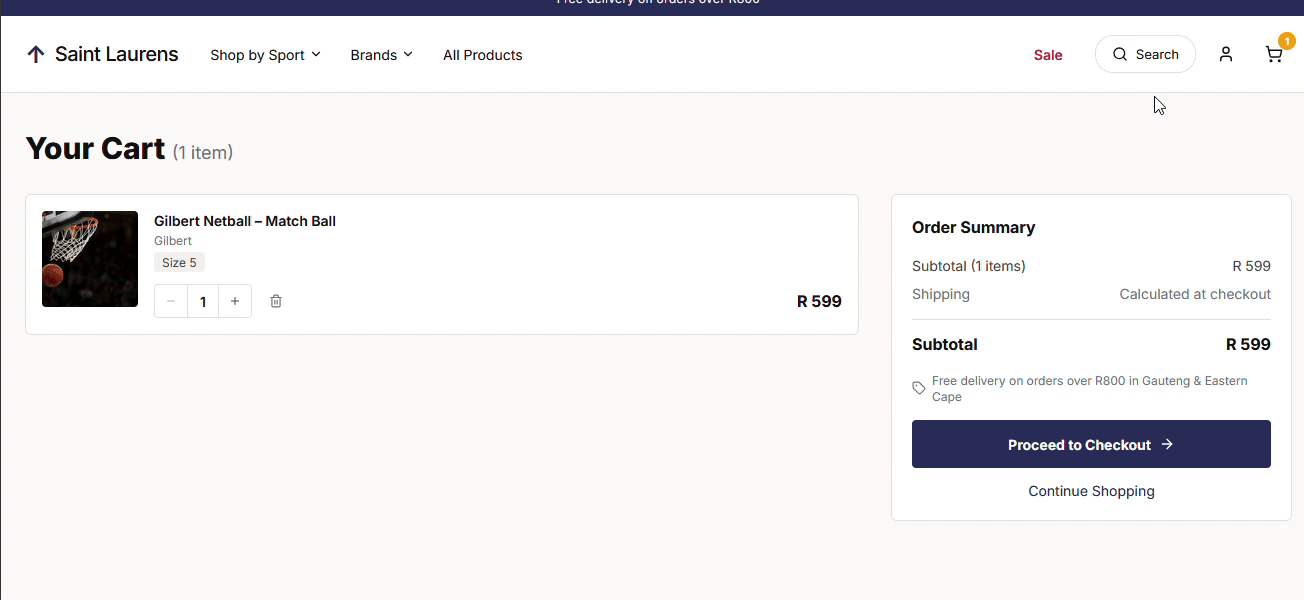
At checkout the cart is reloaded from the database. The browser never supplies prices or quantities, and the shipping rate is looked up on the server, with free shipping above a threshold.
Carts belong to a visitor through a cookie, so they survive a refresh and work without an account.
From browsing
to a paid order.
A paid order
should only be
paid once.
Nothing is marked as paid when the browser returns from Stripe. That happens only in the payment webhook, which verifies Stripe's signature first.
The update only matches orders that are not yet paid, inside a transaction. If the same webhook arrives twice, the second finds nothing to change, so stock is only reduced once. The confirmation email is sent afterwards, and a failed email never undoes a paid order.
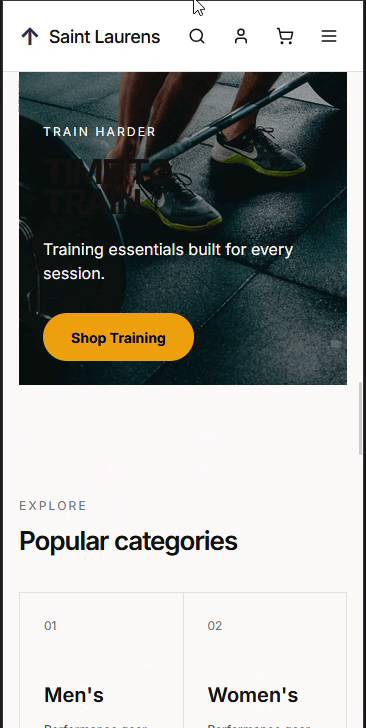
The same shop,
from sport to size.
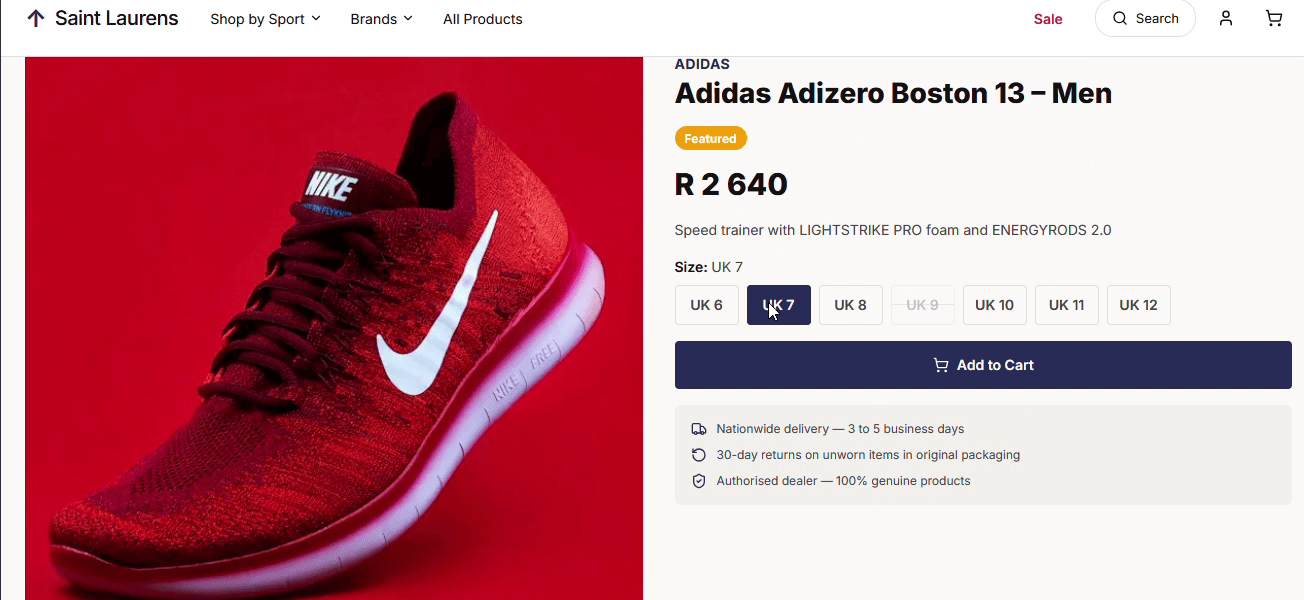
Shoppers can browse by sport or by brand from the main menu, or filter the full list by gender and brand. Each product has its own size picker, and sizes that are out of stock are greyed out.
The mobile menu carries the same sport and brand shortcuts, so a phone gets the same routes through the catalogue as a desktop.
The browser asks.
The server decides.
The shop front
is the small
part.
const markedPaid = await tx.order.updateMany({
  where: { id: orderId, paymentStatus: { not: 'paid' } },
  data: { status: 'confirmed', paymentStatus: 'paid' },
})
if (markedPaid.count === 0) return false // already processedThe interesting work in a shop is invisible: what happens when a webhook is replayed, when two people want the last pair of boots, or when an email fails. Those cases decide whether the owner can trust the numbers.